n a quest to help people from all walks of life understand various aspects of culture, Kungoni Centre of Culture and Art at Mua Parish in Dedza, tackles cultural matters including witchcraft. Our Culture and Arts Correspondent HOWARD MLOZI caught up with the director of the centre Father Brendan O’Shea to shed more light on witchcraft and more. Excerpts:
Q: Why is Kungoni Centre of Culture and Arts interested in culture including witchcraft?
A: It is important to point out that the primary focus of Kungoni is to help people understand various aspects of their cultures. We believe that this greater understanding helps to form confident Malawians who can engage with contemporary issues. Since the centre is the fruit of Mua Catholic Mission, we are also people of faith in God and this plays an important part of any work we undertake.
One of the issues we engage with is witchcraft. We recognise that it was still an important and relevant issue for many people in Malawi and for that reason it is of interest to Kungoni. While it is considered as something embedded in the traditional worldview, it has adapted well to the contemporary world. Kungoni feels it is an issue that requires research and discussion to understand its character and impact.
Q: Do you teach witchcraft at Kungoni?
A: For the record, Kungoni does not and has never been involved in teaching witchcraft. On the contrary, we have spent many years trying to challenge beliefs in witchcraft recognising that it promotes fear and confusion, taking advantage of most vulnerable in society.
Q: What is your view on witchcraft or what is the reality of witchcraft?
A: The reality of witchcraft, beliefs in witchcraft have proven very adaptable through the ages. We now see how it has become a common presence on social media platforms such as TikTok and YouTube. This has helped spread the belief in a whole new way and a more visual manner. What was once confined to darkness is now coming alive in front of our eyes. We should avoid getting caught up in the hysteria this social media fascination with witchcraft which produces videos that confuse people. Many of these are false and exaggerated to attract more attention. A person who respects life and other people does not spread fake news. The narrative of witchcraft should not be left to opportunists to confuse and sensationalise the meaning. It is important to remember that it can bring serious animosity amongst family members. It can lead to violence and in several cases death. This should be taken seriously and challenged with legislation that is appropriate to our present issues. It is particularly serious for our young people who rely on social media for most of their information.
Q: As Kungoni, how have you tackled the issue of witchcraft?
A: Well, education is the first step in taking control of how a person deals with challenges. It has, therefore, been at the core of all what we do. It was for this reason that we invited a group called the Fingers of Thomas from Zambia. The purpose of their visit was to help us understand how to deal with negative emotions such as anger, fear or jealousy. They reminded us that if these feelings are not channelled properly it can lead to confused decision-making, accepting witchcraft as a means of solving problems. It is at this point that we have unscrupulous people who take advantage of this weakness for private gain. The workshop spent a lot of time, explained and revealing the tricks that witchdoctors use to fool people convincing them to partake in action that can lead to dissension, sickness and even death. They often secretively collect local knowledge to add to their supposed supernatural knowledge. They also play on the insecurities of people, creating suspicion and hatred which convinces people they are being bewitched.
Unfortunately, the focus of this anger is directly to the elderly and those with special needs. The teaching given by the Fingers of Thomas emphasised that we should not give these con artists control over our emotions and lives. It will not end well.
Q: What else do you do?
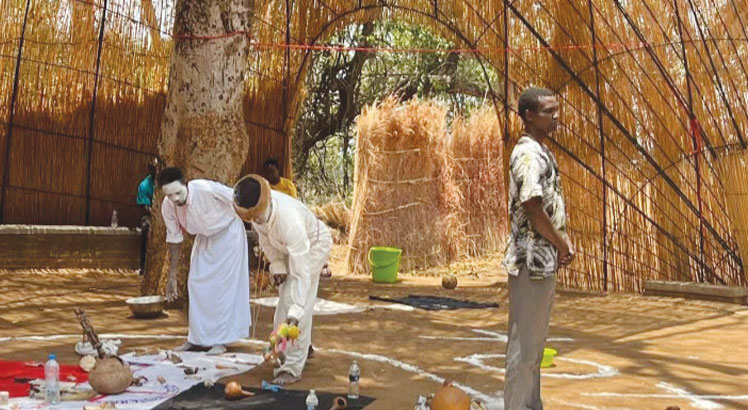
A: Every year Kungoni organises a cultural festival which also aims to help people reflect on topical issues. Our ancestors used song, dance, poetry and drama to share knowledge and remind people what is needed to be a good person in the community. It is these same methods that we use to illustrate how we can destroy or promote life affirming values. We remind people that it is important to remember that belief in witchcraft destroys communities, friendships and families. Both in the workshop we held and our annual festivals we make every effort to collaborate with people of different faiths. It is clear that belief in witchcraft does not follow church or tribal lines. The feelings it uses traverse all aspects of life and all people. The events we organise recognise that we are all striving to promote life and unity, so they often turn out to be inter-religious events. It has helped create a sense of respect and a desire to help each other.
We also make every effort to engage with parents and leaders helping them with skills so they can have the capacity to share with their children on how to avoid getting involved in this activity. Similarly, with leaders in the community such as chiefs, it is imperative that they do not become agents of promoting negative life values. It is their job to have vision to look ahead for their people and make them aware of the negative impacts of such beliefs.
Q: What are your final thoughts?
A: Kungoni believes that confident Malawians need to be aware of their history and culture. We have inherited an incredibly rich source of wisdom from our ancestors, grandparents, and leaders. It is incumbent on us to rediscover what we have embedded in our Malawian DNA. Obviously, there are parts which need to be challenged as not life-giving. One of these being beliefs is witchcraft. We are called to unite the wisdom of the past with the benefits of our present education system to promote life and community. While changing a mindset and a belief system takes time it is imperative that the journey begins. There is a belief that there are evil forces that want to destroy my life. If so, it is my responsibility to protect my life, feed my spirit and body with life-giving energy. Educate myself on how to understand my fears and emotions. Remain vigilant to those who want to confuse my thinking with empty promises and false hopes. It is an issue that should be discussed in schools and places of worship as part of a holistic development, both spiritual and physical. We need to develop critical thinking skills; Who is promoting this and why? Why should I allow these beliefs be allowed to have an impact on my character? If I am a person of faith, then I need to deepen my understanding of this faith as a means to distinguish between good and bad. If I am a business person, I need to be clear about what my boundaries are in terms of honesty and hard work. If I am a parent, then I need to accept my responsibility of preparing my children properly for the world they will encounter. We accept that people believe in witchcraft and occult forces and truly accept it has the power to harm and destroy. One can only offer the alternatives and challenge the belief, but the individual who has to decide how to live one’s life. We cannot offer our faith, intelligence and free will to others to abuse and manipulate. We cannot simply accept that we are at the mercy of some all-consuming evil force. That is what corrupt people want us to think because it makes us fearful and weak, and dependent. Each person needs to take responsibility for promoting and protecting one’s own life and that of our community.